

When Does a Damaged Tooth Need More Than a Filling?
When you have a cavity or a damaged tooth, you might assume the solution will be a filling. Often, it is, but sometimes a tooth has lost enough strength or structure that filling the damaged area is no longer the best way to protect it. In those situations, a dental crown may be the best solution.
Deciding Between a Filling and a Crown
While cavity size is certainly a contributing factor in our decision to place a filling or a crown, it’s not the only one. We consider how much healthy tooth structure remains, what kind of damage has occurred, where the tooth is located, and what the tooth needs to do every day.
What a Filling Does
A filling works well when damage is limited to a relatively small area of the tooth. If you have tooth decay, we can remove the affected portion and replace it with tooth-colored composite material. The filling restores the area while preserving the healthy tooth structure around it. Preserving your natural tooth is important. When a filling can restore the tooth predictably and give it the support it needs, there may be no reason to do more. The situation changes when the tooth itself has become significantly weakened.
How Much Healthy Tooth Is Left?
Imagine a tooth that already has a large filling and then develops additional decay or damage around it. Eventually, there may be more filling than strong natural tooth structure to support it. Simply removing the old restoration and placing an even larger filling may not provide the protection the tooth needs.
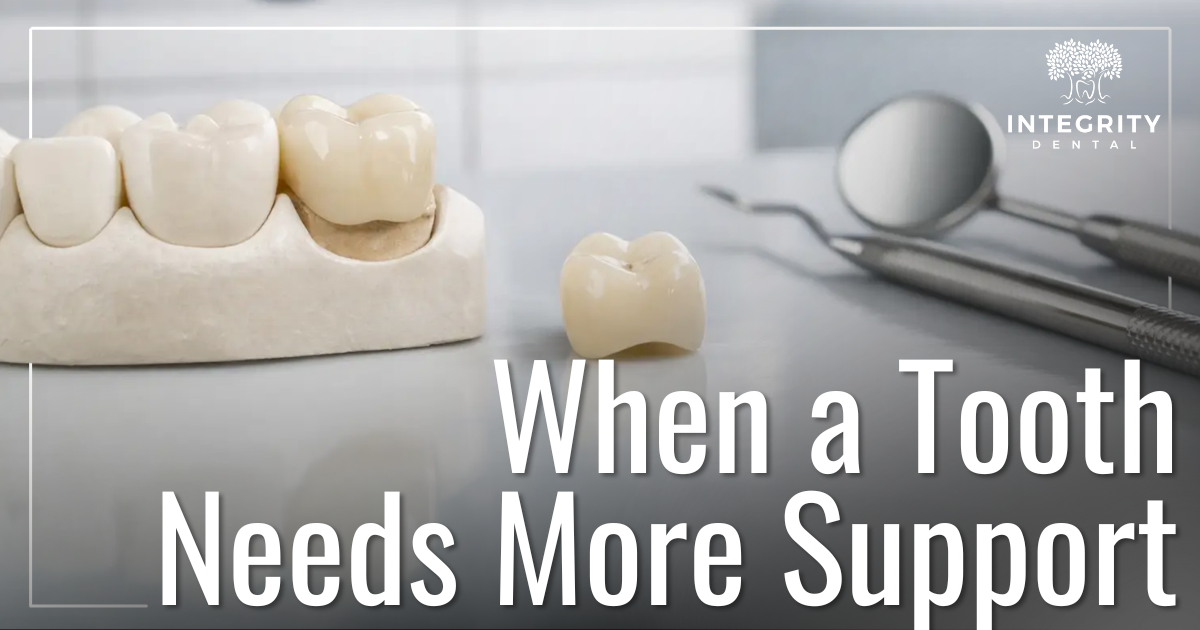
This is one reason we pay close attention to how much healthy tooth structure remains. A dental crown works differently from a filling. Instead of restoring one portion of the tooth, it covers the tooth to provide support and protection.
Cracks and Breaks Change the Conversation
Decay is not the only reason a tooth may need treatment. Teeth can crack, chip, or break. Sometimes the damage is obvious, while other cracks are more difficult to see. When evaluating a damaged tooth, we want to understand where the crack or break is located and how much of the tooth is affected. A small chip may require relatively minor treatment. A tooth that has lost a substantial portion of its structure may need more protection.
Where the Tooth Is Located Matters
Your teeth do different jobs. Front teeth help bite into food, while the molars toward the back of your mouth handle much of the heavy work of chewing. That means we also consider the forces a restored tooth must withstand. Your bite, the location of the damage, and the amount of pressure placed on the tooth all influence which restoration makes sense.
We’re not only thinking about how to repair the tooth today. We also consider how that repair will function when you eat tomorrow and in the years ahead.
What About a Tooth That Has Had a Root Canal?
A tooth that has undergone root canal treatment may also need a crown, depending on its location and condition. By the time a tooth needs root canal treatment, it may already have been affected by significant decay, a large restoration, a crack, or other structural damage. A crown can sometimes provide the additional protection needed to restore the tooth afterward. Again, the condition of the individual tooth guides the recommendation.
Earlier Attention Can Make a Difference
Dental problems do not always hurt when they begin. A small area of decay can grow. A weakened filling can deteriorate. A crack can become more significant. Regular dental exams give us a chance to identify changes and decide whether they need treatment or can be monitored. When a problem does require treatment, addressing it early may help us preserve more healthy tooth structure.
The Right Restoration for Your Tooth
There is no single rule that says a damaged tooth needs a filling or a crown. Our goal is to understand what has happened to your tooth, determine how much healthy structure remains, and recommend a restoration that provides the appropriate level of protection without doing more than necessary. Just as importantly, we want you to understand why we are making that recommendation. We welcome your questions and will take the time to talk through your options.
If you have a damaged tooth, an older filling that concerns you, or a tooth that doesn’t feel quite right, schedule an appointment at Integrity Dental, located in Wellington, FL. We can evaluate the tooth and help you determine the best way to restore and protect your smile.